
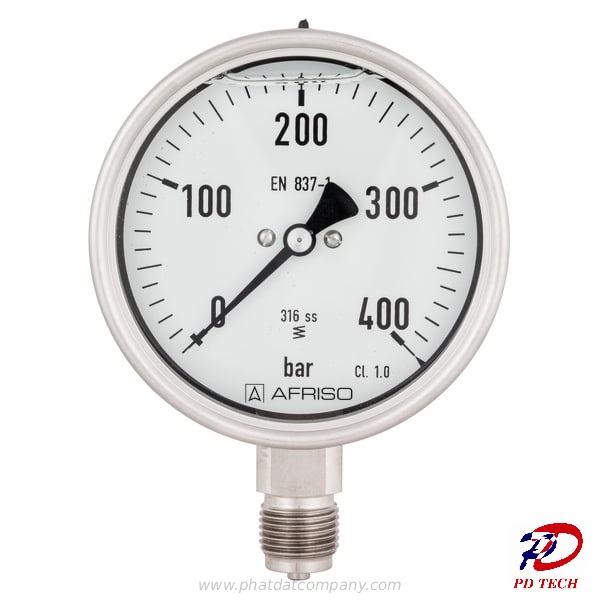
What is a pressure gauge? Structure and operating principle
A pressure gauge is an indispensable device in industrial production activities. Measuring and displaying pressure in pipes, on machines, on industrial systems helps you manage your factory system well. Adjusting or handling overpressure, underpressure, etc. in time makes your factory operate smoothly, creating high-quality products for consumers.
What is a pressure gauge?
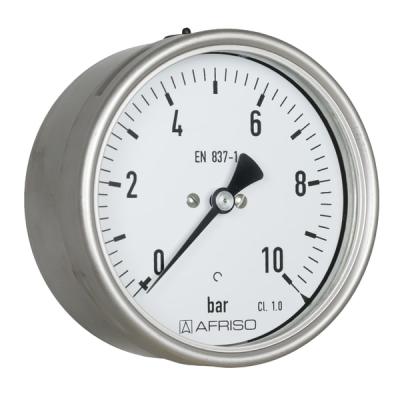
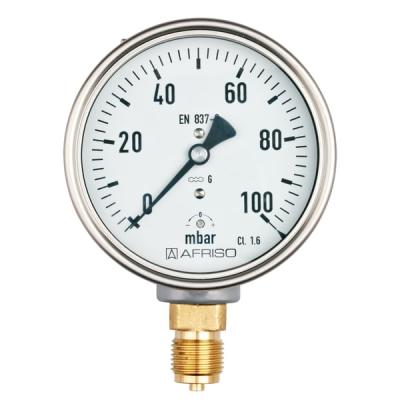
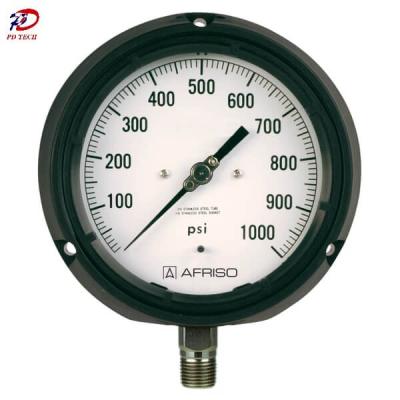
A pressure gauge, a device that measures the internal pressure of the environment in a system, is one of the most frequently used tools in any industrial plant. Pressure measurement, along with temperature measurement, is one of the most important measurements for operations in many different applications - especially industrial applications - and is essential to ensure both product quality and plant safety.
Pressure gauges are used to monitor and control pressure - often essential in industrial production processes. Without pressure gauges, industrial systems would be unpredictable and unreliable.
Structure of Pressure Gauge
.webp)
1. Ring
2. Glass
3. Gasket
4. Pointer
5. Dial Screw
6. Dial
7. Moving Screw
8. Head Bolt
9. Movement
10. Bourdon Tube
11. Connection
12. Top Oil Stopper
13. Housing
14. Rear Oil Stopper
Principle of Pressure Gauge
A mechanical pressure gauge uses an inner tube connected to a gear assembly and shaft that work together to move the indicator needle. When the pressure inside the tube increases suddenly, the tube will open slightly. When the tube opens, the movement will activate the gear system and shaft that move the needle on the gauge. The amount of opening movement that occurs is related to the pressure inside the tube. This movement then informs the needle, giving you a pressure reading.
Advantages of Using a Pressure Gauge
Advantages of Mechanical Pressure Gauges
No power supply required: can provide important measurements to keep processes running safely and efficiently without electricity.
Simple design: easy to install and maintain.
● Accuracy and reliability
Pressure gauges, especially those manufactured by AFRISO, are known for their accuracy and reliability. With tight tolerances of up to ±0.5% of full scale, these devices provide essential data for precise control of industrial processes. The reliability of these devices ensures that they always provide accurate readings, which is crucial for maintaining optimal operating conditions and preventing equipment failures.
● Cost-effective
Compared to other monitoring devices such as electronic sensors, pressure gauges are more cost-effective, both in terms of initial investment and maintenance costs. Additionally, the long life and low maintenance requirements of mechanical pressure gauges make them a more economical choice in the long run.
Depending on the application, mechanical gauges are often more affordable than electronic pressure gauge options
● Simple and easy to use
One of the significant advantages is their simplicity and ease of use. They do not require any power source, which makes them particularly useful in environments where power is unreliable or unavailable. Furthermore, their analog displays allow for quick and easy readings without the need for complex interpretations that are often required with digital instruments.
● Durability
Pressure gauges are designed to withstand harsh conditions, including extreme temperatures and vibrations, commonly found in industrial environments. We ensure that our gauges are built to withstand such environments by using robust materials such as stainless steel for the housing and borosilicate glass for the sight glass. This makes them highly durable and capable of operating efficiently for long periods of time, even in harsh conditions.
Advantages of Electronic Pressure Gauges
Many applications for electronic pressure gauges require them to be used in temporary installations. Digital pressure gauges, such as the DIM 20, DIM 30 electronic pressure gauge, are suitable for a wide range of applications and industries, including mechanical engineering, hydraulics/pneumatics, pumps/compressors, and general inspection/maintenance operations.
Because they can be transported at alternating intervals during an application, electronic pressure gauges have well-designed battery cases and robust electronics to ensure the longevity of the gauge and the subsequent accuracy of the measurements.
The measurements that electronic pressure gauges provide on a digital display are both fast and accurate. When a local digital display is required, electronic pressure gauges, such as the DIM 30, are the ideal solution. They eliminate manual work when calculating pressure by reading international units of measurement including bar, psi and MPa. The multi-function display also features a bar graph with drag cursor and a MIN/MAX memory feature that can recall minimum and maximum pressure values.
In addition to full-scale pressure display, electronic pressure gauges offer many other advantages, including:
· No operator interpretation required
· No parallax error
· Stable reading under high vibration conditions
· Easy range change