
- SP
Continuous Water Supply Linear Control Valve Application For Boilers
A boiler is a device designed to generate steam by heating water. It acts as a heat exchanger, converting water into steam for various external uses.
Water tube boilers use a steam drum to ensure that the steam delivered to consumers is “clean” (free of impurities and moisture). The water tube boiler steam drum is located at the top of the boiler, above all other parts of the boiler. The steam drum is characterized by a long cylinder, usually made from thick steel plate to withstand high pressures and temperatures during operation.
However, continuous steam generation is a bit more complicated. An important variable to measure and control in a continuous boiler is the water level in the “steam drum” (the upper part of the water tube boiler). To produce a continuous stream of steam safely and efficiently, we must ensure that the steam drum never runs low or gets too high. If there is not enough water in the steam drum, the water pipes may dry out and burn due to the heat of the fire. If there is too much water in the tank, liquid water may be carried away by the steam flow, causing problems on the steam side.
Water tube boilers are used in power plants because they can provide large amounts of steam at high temperatures and pressures.
There are 2 common ways to control the boiler water level
ON OFF control
Continuous feed control Modulating by linear control valve
Let's find out together.
ON OFF control is only applicable to small capacity boilers.
In this article, we focus more on continuous feed control Modulating by linear control valve. This type of control is applicable to boilers with a capacity of 5 tons or more.
Accessories include:
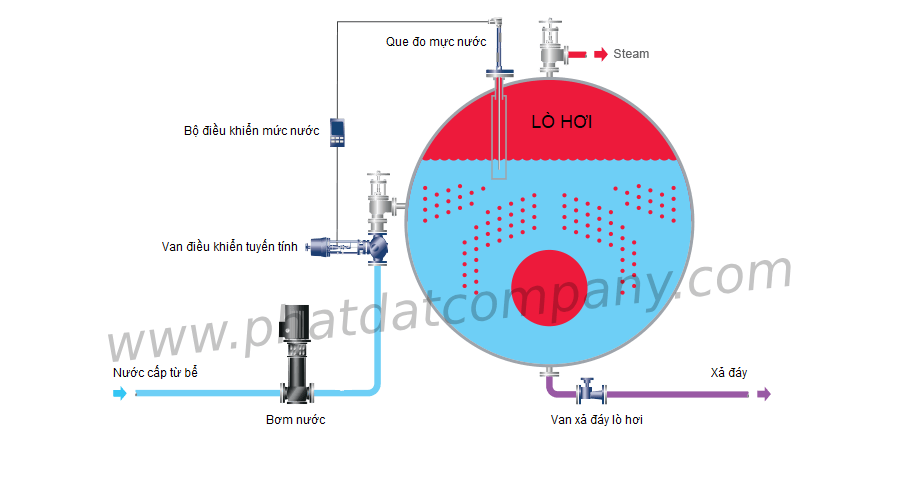
Level sensor, also known as water level gauge
Level controller, also known as level controller
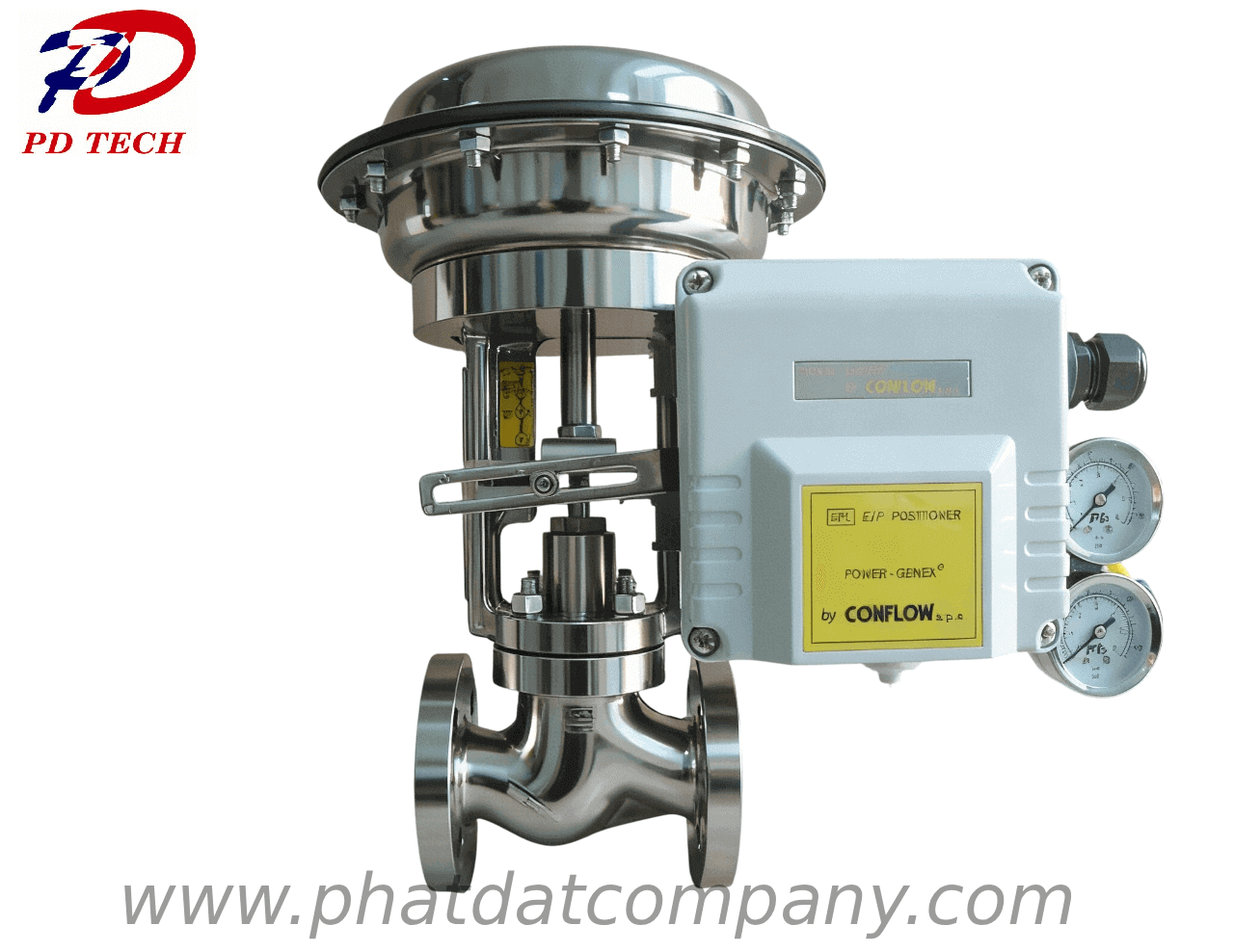
Control valve, also known as linear control valve
The water level gauge will sense the current water level in the boiler. It sends a signal to the water level controller (Level controller). This water level controller will send a signal to the linear control valve. The valve will open or close more or less depending on the amount of water in the boiler, or in other words, the valve will open or close according to the parameters set on the water level controller when this controller receives the signal from the returned water level gauge.
In short, the function of the linear control valve is to adjust the amount of water supplied to the boiler, maintaining a stable water level. This precise control is very important for the efficient operation of the boiler and preventing potential problems such as:
Low water level: Causes the boiler tube to overheat, potentially causing damage.
High water level: Can cause water to overflow into the steam system, affecting the quality of steam and the next steam usage locations.
What is a linear control valve? Structure and operating principle of a linear valve. You can see here.
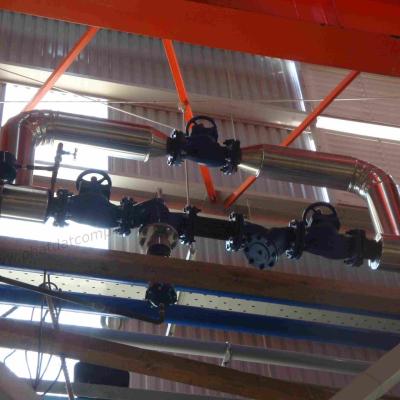
Linear control valve continuously supplies water to the boiler
Linear control valve
Water level gauge. You can see here
Boiler bottom discharge valve. You can see here
Phat Dat Company specializes in supplying and installing all kinds of linear control valves.
Contact phone number 02835531725, Hotline 0989286139 or email: info@phatdatcompany.com
Hope the above article shares useful information to you. Thank you for reading the article.
If you need any comments or additions, please contact us.



PHAT DAT TRADING ENGINEERING SERVICE COMPANY